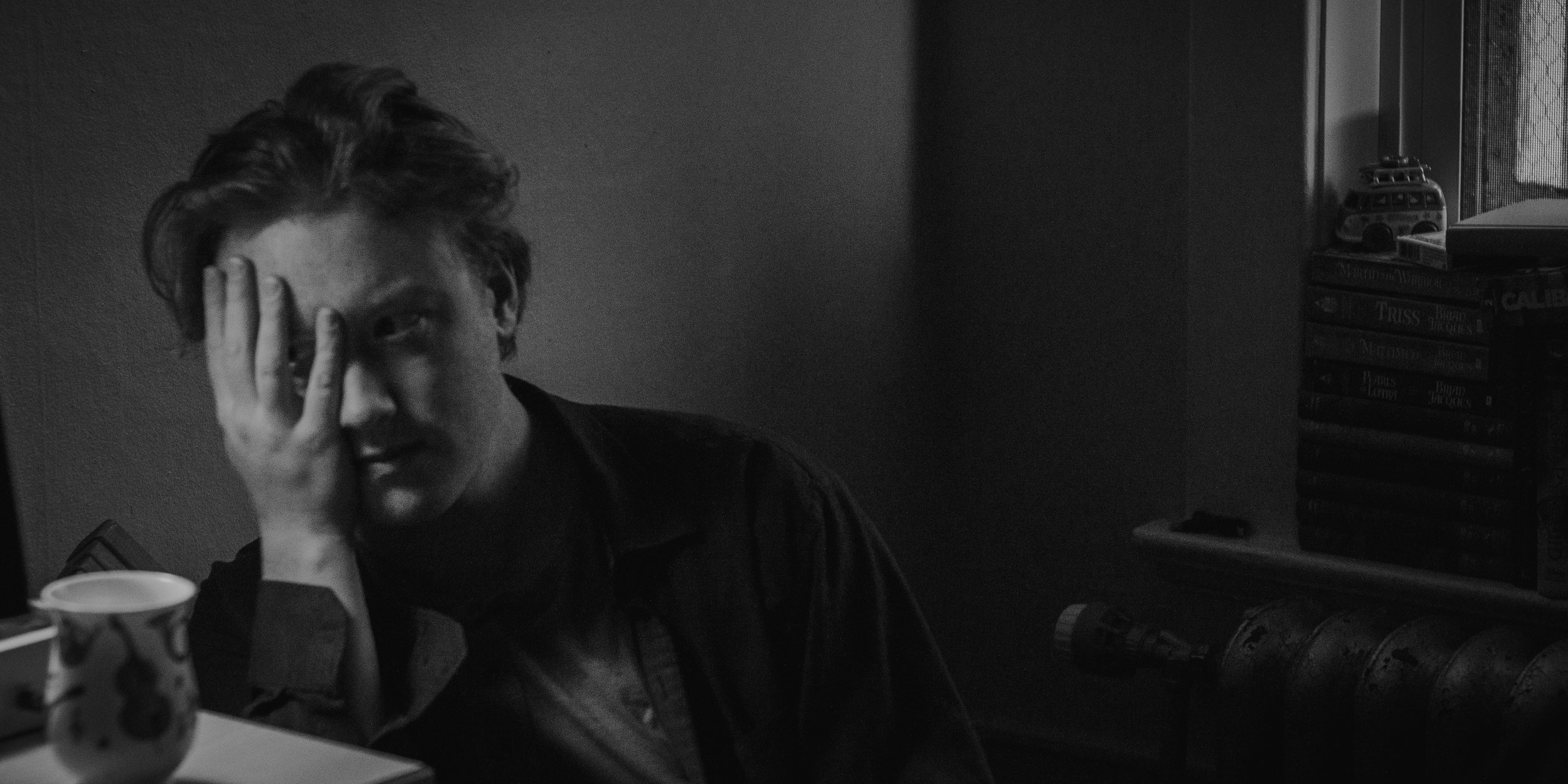
Know Myself Better
My twisted cry–
The anguished sigh
I breathe into the air
Under a night that darkens
Into the light of the
Electric lamps which leer
Over my head,
Oppressive in their place and stature,
Reassuring in their presence…
I do not know the pain
of the other,
The loner
The tosser
who sings drunkenly along the
Walkway, the byways, and
Who crosses every toll-bridge
And passes every entryway
Without a lonesome coin flipped
To the man who stresses the
Importance of
“Earning your keep, young man!
Hand over your coin, your check,
Your note, or the lint that lines your
Scraggly, torn-up pocket–I’ll take
The last of it all, and you can be grateful,
then, and thank me for my kindness
And due diligence.”
My body is tired, my mind is aching
And the shakiness of my timid breath
Leaves its trail as I walk through
The streets towards the next toll–
Little ghost trails, spectre tails and
The ghastly form of a resolute demise.
The hand beckoned forth, then, as I entered the hostel,
The next place that I can rest, and be within closed doors.
I rummaged into my pockets, in my shoes,
Between the failing lining of my coat,
But under my hat, there was the photograph,
Of the friends I used to know:
“Will you take this, keep it close against your chest,
Or the hair of your head? Keep it pressed to you, your body.
These men carried me across fields, and across the barren wastes
Of a land you have never seen. Will you take this against your body?”
His hand moved to his face, then to my own. He brushed a tear from under
My bloodshot eye, kissed my cheek like the Father to the meek,
and said to me:
“Enter, you are like our own. Your photograph is yours to keep,
And also your coat, your shirt, your trousers and shoes.
Come in, come in, and know yourself better, man.”
Mvmt No. 4 (Cantabile)
Mvmt No. 4 (Cantabile)
The Tree Under Which We Grew Older
This one is a chartreuse…
It mellows in the springtime sun,
Casting its shade against the thawing ground
Which grows life into life, into fickle memories which stray
From the earthen soil that floundered under laden snow
Insects gather in each falling ray of light.
And what passing roots and dried-up tubers,
What sullied treesides, by the dells, glens, and by the roes
Which traipse through sodden tall-grasses
Will be remembered through turbulent
(Or not so)
years?
“Whips and scorns of time…?”
We could rest here, then.
We could stay awhile, take a much needed rest
In this hollow, this nesting and cavity which has
Been nestled in by–
(How many before us?)
How many have rested here?
We are only a passing moment in this nurtured scene
We will forget this place,
And this place will forget these
Moments, where we spent a springtime growing into
The garden floor, the relic moor, the something
That we spared time for, instead
When there was only strands of cherished lint in our pockets,
An acorn that was collected from the pathway beneath us,
Or the beads along the twine that broke when
We did not know our own strength
“Come in, under this shadow. Let me hold you until it’s late.”
But there would be a morning where
Sunlight would not shine through,
Break past the billowed clouds.
There would be a day, where we rise from our bed,
Stumble through things that were said
Or not said,
And that would be good enough.
It would be welcome, and mulled over
Like the water that weighs down the cloth
Which covers us,
Shields much from the harsh breeze, the things
That we would rather exist more leniently.
It will take from the day what it will, and we make do with what we keep.
Frequent were the nights,
Though there would be no moon
Suspended in her place in the sky,
Nor a breeze that would wander in through the window
Which lilted open, waiting for it–
Frequent were the nights where
We would fall asleep in an embrace,
Holding, facing the other, our foreheads pressed
In that routine, the habit, the beautiful ritual
Where we take time to mingle and calm our chaos thoughts
Find that synchronicity–the place where our
Untrammeled adoration
Blossoms under a genial sun
(Or no sun)
Hyacinth indigos which I place behind my ear
I keep my memories
Locked in their own kist.
I return to it each evening and
Place the ones I cherish,
The ones I would carry with me, always
I take it then, and bury it neatly under that tree,
Carefully place the warming soil above it,
And press down the seeds which I plant to protect
The mind and recollections from
An eventual April rain
Leig dhomh do làmh a chumail, mo Gràdh
Let me hold your hand, My Love….
Let us roam through these memories, brought
To us through the places we forgot,
(Or not forgotten)
I wonder, then, if we both will return to the tree
The leaves which blessed us a mercy of shade,
Or the roots that clung to our sides, in a loving embrace
The feet we dangled over into the water,
Curious dace which travel in a single place
“Stay here, you needn’t do anything in this space.”
Or will we look over the water,
see the boats covered in kaleidoscope lights?
Will we chance one last glancing sight at the sun,
Before it is snuffed by the hand which
Was the same before we rested at
The tree under which we grew older
The Nighttime Parade
There was a light.
Through the lilting lampshade,
And by the window
Where there was only the shadows
From the trees that moved outside.
Imagine them, for a moment,
reaching out towards the window,
An extended finger in a curled beckoning:
Come with me, let us find some meaning
In the nighttime parade of all the things.
And the streets, roads and the dusty byways
Which when the blanket is thrown over the eyes
Of all the diurnal critter and folk,
There can be seen the littlest of eyes poking out
From behind the brush and bramble
Little moon glows, candle flames and shimmering coins,
Pebbles which reflect the reflection of the sun.
I snuck out one night, you know.
Exchanged my sleepwear for the warmer pajamas,
And shoved on my slippers, dashing out under the ebony sky,
Where stars cocked their shimmer from left to right,
And the moon chased the sun out of his place of day–
That is where I looked up,
The seams of the road I stood on,
Patched with decades worth of corrections,
the grass that grew only because the concrete let it,
And the dandelion weeds that wouldn’t ever die
But yes, I looked up,
And felt small before it all,
And then down and to the right,
There was the moon glows, flames and coins–
Pebbles which flickered between the brush and bramble.
So I sturdied myself against the ground,
Chanced one more hurried glance unto the sky,
Fastened my laces so I could walk with surety,
And smiled at the moon glows, flames, coins and pebbles.
I walked with them, in the nighttime parade
And I Found Myself Drowning…
I woke up
And I found myself drowning.
The ripples from where I had fallen,
The billowing waves above me.
So, I caught my breath, anchored it to my throat
and
My fear faded–
husked to the silt, and held
By the tide which lilted
me into a solace memory
Where rocks would not grow upon them new moss,
And the morass around it would not dry enough
To let the milkweed see the light of sun–
That is where I was lain.
In the densest of shadows, and under the
Darkest of nighttime skies, I settled into
Comforting memories of
The tall grass which beckoned me forward
The thicket I would hide in as a child,
And the ceiling fan which nearly saw itself to pieces at the speed it could barely maintain
I woke up,
And from window I could hear
The world as it was…
And I found myself drowning.
Melancholy Quartet
Melancholy Quartet
__________________________
1.
The breath that I threw
against the window
It blurred your face, the pane…
I took up my own sleeve to
Wipe away the ghost of it all,
And then you were gone.
2.
She stepped off the bus too early
For the daisies that grew
On the curb of the dusty streetside
She stole them from the soil,
Planted them in her heart,
But they wilted, still.
3.
The 3rd grade teacher
You used to love,
Was brought to the center of the city
They said she taught too much kindness,
And not enough scrutiny
So they threw their stony words at her.
4.
He smoked them two at a time, seared to his lip
Dousing them in a bottle
full of rainwater
The coffee can he had
Was full of the devotions and scriptures
He did not need.
I See You As The Yellow
I see you as the yellow
The slow honey
Dripping from the comb
Which lingers over the summer breeze.
I see you as
The chrysanthemum,
Yellow in the autumn,
Or the setting Sun,
Before a new day comes, steadily
Over the horizon:
The line where blue meets grey
And the ocean mist sprays
–blurry–
against your face
My hand rests.
Against your face,
My fingers brush away the ocean salt.
I hear you.
You are the sound of the tall grass,
Moving in the springtime wind,
Yellow brush which sprouts
Memories
–people feel no passage of time.
Smiles
–blush–
frozen in photographs,
Sepia-tone yellow
Lines of a staff of sheet music which rustles
In the open window.
There is a glancing, yellow sunlight off the sprouting leaves.
It dapples the grassy ground,
Moving with a mellow grace
Each passing face
Turns to that comfort space
That place where the light hits the tree
Ils se déplacent au ralenti.
Or do I?
Do you?
I wonder now,
When you laugh
In the car
with the Sun glancing off the
Far-away sign,
Do you feel time
Move slowly–
Like there’s a memory
That is forming
Like the hand which presses softly
Into the clay?
Like the child
–who prays–
Who leaves their print
When they survived the harsh–
Winters
were kinder, then
Penned down the moments
–like these–
Etched into the paper,
Ink blotting at the edge
Il y en a trop,
alors on dort et on attend
… Wait for the tender-hearted
Melodies which weave
through dashed yellows, passing signs
Laughing in the car,
While we sing out “One More Time”
There was a yellow in your glance!
There was a kindness
in your welcome stance.
Your eyes flickered–
A fire that said,
“So, what’s next?”
You looked at me
–smiled–
And a lightness filled my chest.
When we were new
Nous commencions tout juste,
à la fin de l'été
I remembered the trees
–swaying–
I remember the yellow hue
Lingering over the water,
And the leaves which
Afforded us the shade
–Bade the yellow Sun
To stop–for where it was to stay–
“Give us more time,
We have so much more to say!”
But the light would not linger,
The Sun would no longer
singe
The flower
I put behind my ear,
Or our skin,
As we turn our faces to the sky.
So I’ll turn to you, then,
–My eyes are callow–
Face your kindly light,
Because I adore–
I know your color of yellow.
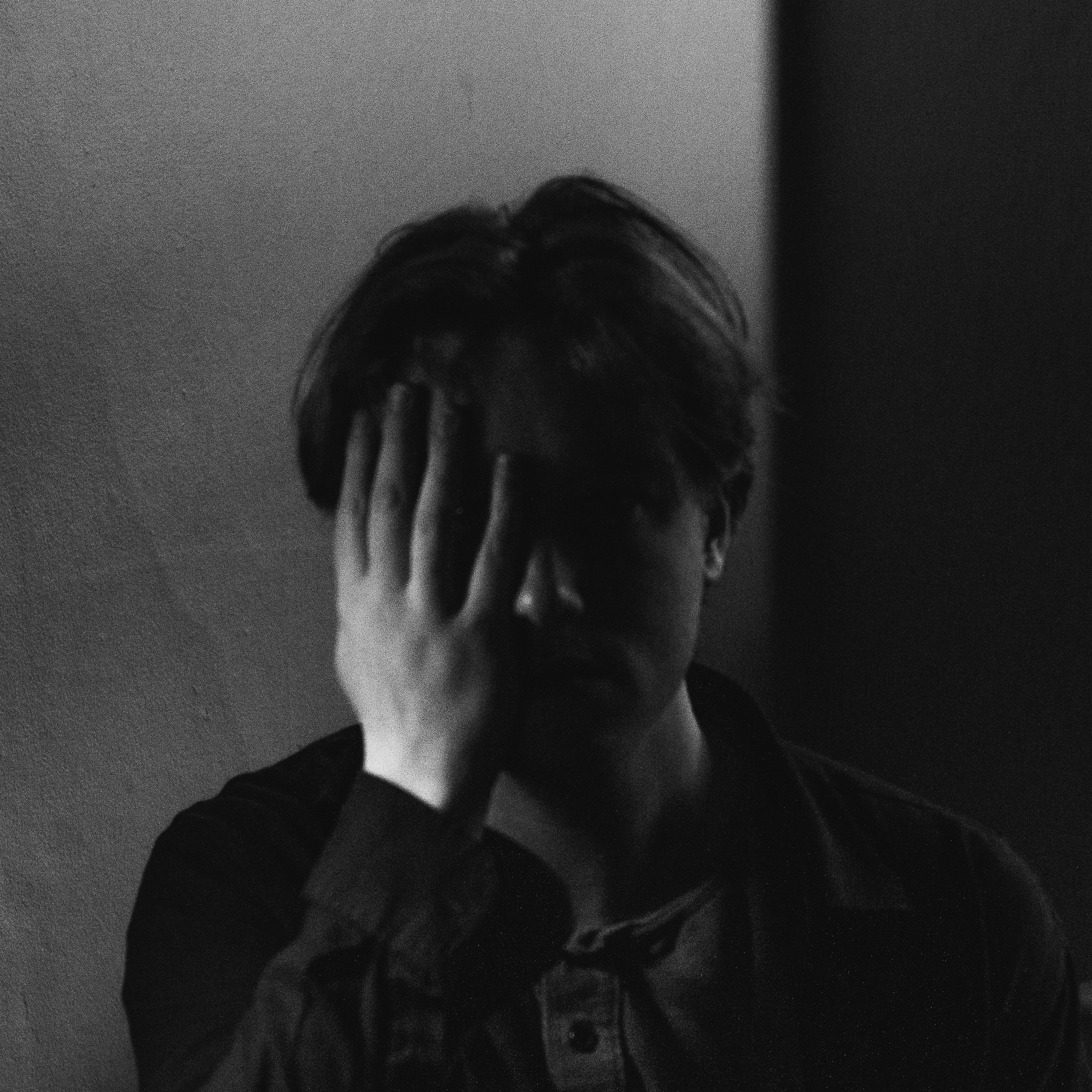
There Is A Phantom
There is a phantom in my head.
It’s been there for as long as I can remember. Buried within latent joys and sorrows--things hidden under the careful wraps that make up the scattered folds in my mind. We all have folds--the creases and wrinkles, and the places where shadows linger and foment, and where light thrives so long as we nourish it with the proper intention.
My phantom is unlike yours.
Yours may be a secret--a special knowledge spoken only under the dimmest of candles, or between parallel hands against one’s ready ear; but my phantom is different. Though it is no secret, it can only be understood within the context of another who shares this phantom, and even then, the understanding between us two will likely be middling.
Do you know your phantom, Reader?
I address you plainly, now. You must have one--we all do. Do you know the folds of your mind which conceal venom transgressions, and do you know also, the edges of the folds which catch the light? Your phantom may migrate from fold to crease, from cavern to hilltop, but it is important you know it, and why it is there. Do you know your phantom?
Some have given their phantom a name. Some call it Jealousy, and they hide it behind the folds of a forced smile or well-chosen string of words. Some have christened it Anger. It’s only a secret so long as it is kept so; but in so doing, it festers--it twists in upon itself and only ever comes into the light of one’s mind when it is no longer concealed.
My phantom is not like these.
I did not choose the name of my phantom. Instead, it was bestowed by another--one who I had barely known. It was given to me in a dark place--a place full of rooms lined one after another, people moving in and out through the lingering smell of chemicals which were used to clean the traces of the phantoms of others who frequented this place. He walked into the room I sat in next to my mother, with a face not as solemn as it should have been. He carried with him a stack of papers upon a board, and after a careful scan of the papers, and a few well-placed questions to determine how ready I was to receive a name for the phantom, he spoke the name.
For the first time it was a declaration and not a speculation. It came suddenly and without attachment--he had known no such phantom like my own--but he spoke it nonetheless. Within a few heartbeat moments, my phantom had a name. It had a name, a record, and a plan going forward: “How were we to take care of this phantom? How were we to deal with its existence, so that you--the one who carries it, may have an existence, also?”
There is a phantom in my head.
It is kept within folds, beneath the lighted creases of my mind, and only shows itself from time to time. My phantom is always there, make no mistake. It burrows and hides under covers; so though it remains hidden, I may know myself well enough to know it is still there.
And then, once in a while, it makes itself known–it crawls out from the covers: the folds of my mind and reminds me, very keenly: “You are not alone here, in this light.” It speaks to me in muttered tones. It had stepped out from the folds where it was suppressed by the “plan going forward,” and dragged itself forward into the light where I walked. It is not welcome in this place.
There is a phantom in my head.

My Color Is The Green
My color is the green
That grows upon the side of some forgotten tree
Depths of a wood
Not trodden since
A time lost (to all of us?)
Not as such. I remember
That hollow I stumbled into
I remember that green
I remember thread-like light
Peaking
through dew drop leaves
And scenes passing by
Cars pass by
But I don’t hear them
I see the stems
My face against the soil
My eyelashes blinking out the
turmoil?
Toil?
Let gossamer sunlight dapple my face,
and send me drifting. Reckless: when I let time slip by.
I found a solace, then, in that color green.
The one that embraced me when I was keenly seeing—
Seen?
Tie together the branches,
Thread the flowers into a bracelet (Not a crown)
And make me a king!
Of this cradle canopy I will return, (But for the grace of Nature, go I)
As a servant of those relic sights
Mellow times were harsh against the eyes
And the grass sharp against my bare feet…
So wrap me in swaddles of the forest brush,
so I might rest in that color of green.
My scent is the petrichor
The fresh dew upon the forest floor
The sun that lifts the wisps from the wakening moor
The core of the fallen tree which grows new life,
Into life
Into life.
My sound is the careful breeze
The kindly roar which teems
With the words that came before
I was here.
Or not here?
Merely ghosts upon the wind which spur
no fear
Goad
no tear
from a tempered cheek.
Blessed are the meek?
I will seek
The green I have already found in that
Missing dream
It’s been misplaced!
Like the memory
That I wish I could see
Once more
Played against my eyes Like a movie against
The method actor’s screen.
Yet I will find solace, now,
In my own memory
The knowledge
The knowing
Of that green that molded me.
Short Story
Looking out the window is a curious sort of hobby to take up, you think. It’s like conversations! There is a plain barrier between you and what’s on the other side, yet every once in awhile,you catch a glimpse of your own reflection against the frosty pane.
There is a common geniality shared amongst all windows, in a very odd sense (being that they are indeed, inanimate) because they are—for all intents and purposes, made to be ignored, yet they do not complain; they do not wail on about how they are forgotten and only ever seen past and not directly, and they do not—you think—repeat secrets.
They see so much! How much have the windows in your room seen? Those passive blockades, keeping out the unwanted cold and the brazen, nighttime intruder—they see so much… if you let them. Because, indeed, they will occasionally not be made privy to the happenings of the inside of a home—they will instead be covered by the tattered, stained drapes that laid across the lilting rods, hung with little care as to the balance of it, and then you are alone.
This was the way you liked it. You preferred being alone, and you preferred the drapes closed. Those windows had seen far too much already. They had seen the things you weren’t proud of, the things you would rather have closed up and shoved far down beneath the frigid, earthen soil, and the things that you would rather forget ever occurred within the confines of that room.
It had been awhile since you had left that room, though, hadn’t it? Living off the water from the faucet in the back of the home, the food that was brought to your doorstep from what friends you had left, and the books saying things like, “Once more unto the breach”, reminding you that you had to face the things you’d rather turn away from… “Summon up the blood…”
At first, it was only days that had passed. You were able to say, “I’m taking my time.” But then weeks passed, and “taking time” became the sort of obsessive excuse one makes when in the mire-filled pit they’ve given up trying to crawl out of; and after the first month, the friends that had stuck around to observe your guilt-ridden reclusive-self, gave up also.
But on the 9th day of the second month, the sun shone through the clouds in the early morning; and as the dew was lifted from the grass and branches as ghostly wisps, so too were your spirits. You flung off the wool blanket that covered your ready body, shoved on your pair of winter boots and threw the door open, letting in the cold, January air. Then, glancing to the drapes that held in the pain, you rushed over to your windows and tore the drapes down—curtain rod and all. You needn’t ever hide, again. You are made new. You are loved.
Untitled
a poem.
And it was for the honeysuckle moments that we endured the
sour ones?
Yes, the sour ones. You know, the moments where upset faces
our faces were downcast
Stages in our lives that we wish would pass
More quickly
swiftly?
Yes.
The moments were tricky, full of doubt in ourselves, wondering if the time spent now was all for naught
not so?
No.
Then why need it be so hard?
Start to wonder if the path we’re on is
marred by the people who
Failed?
yes.
don’t you know? It’s strange to walk along a road when
the road is littered with the corpse memories of those who
Failed?
of course it’s scary—it’s almost…dreary, you know…
To walk a path when all you see is those leering at you from the places they huddled in because they
Failed.
too harsh. They weren’t us.
They weren’t us.
I’m beginning to wonder what would happen if
We joined them?
sat along the road and leered at those who walked after us…
That’s a road.
yes.
Guess what I am to say next?
I know you. You will say the road is ours to walk.
Yes.
And we choose which paths we take and those we do not
Sought
out the roads that were less travelled
Pummeled by the rain instead of the doubting ones who said, “All for naught!”
Not so?
No.
So what if we fail?
Will we?
I don’t know what I would do…
Neither do I, you know—to think of a world where I’m not
… something I’m envisioning
It’s a reckoning
with whom?
Ourselves? Maybe? A time when we have to decide, in the pace
Space of a few heartbeat moments… are we willing to do what needs to be done?
It’s not about A-Z, but the journey, trajectory from A to B, that’s what we focus on
That’s what we’re missing…
Make a noise loud enough and they’ll have to listen
Move myself so emotively that their attention will be
Captured!
and their minds moved to a place that they knew not of—a place where they can rest for a moment
be challenged for an hour and then
Then?
Think.
About what?
What if we succeeded?
Together?
Yes.
What if we became everything we ever wanted to be?
We found each other…
I didn’t expect to find you…
you did.
Yes.
Things happen for a reason sometimes, you said.
I said something like that.
Led
me to a place
Stayed awhile and then faced the rest of the day
And this is pain!
The path is difficult.
Resulting in what?
No action is so permanent that it cannot be undone, unstitched
Erased or unhitched from our backs—the weight we sometimes carry is only because we choose to carry it
True,
and you see me see you
What do you see?
An artist!
Yes, I see the same
It’s pain
Yes, that’s only the arts’ blame
Or is it the things we make?
We make the wrong things, put out the wrong voice
Never showing enough of ourselves so that we make the choice
to hide! Or miss the count of 5678—tendu, dégagé, tendu, dégagé
Counting in time to the rhythm that I missed the entry of
and what if we’re in the wrong place?
Doing the wrong thing?
What if we’re just us?
Doomed to rust
along the road that the
leering faces must settle on?
Just! That word has stifled, muffled and quenched the genius out of far too many.
I’m not a genius, I’m just me.
Just! You said it again.
It’s true.
Is it rude?
To yourself?
Cheapening your voice and your choice you have in this matter?
“Just!”
We are artists! We do what we must!
Just…
Do you not know?
Did you not sew
your shoes one morning when
I watched from your bed,
Your fingers moving so effortlessly—they knew they way
You didn’t want to, but you did it anyway
Because I had to…
Because you had to. Exactly. It’s what you know, yes?
Guess how many people who came before had not half of your brilliance and vision
Half your doubt. You seem to doubt because you care—it means so much, because
it’s everything!
I know.
And you know how to press meaning into the movements you make so instinctively.
I see that.
And do you not see how you move people with your sound?
Your mind clouds
your hasty judgement when you doubt who..you..are,
and it’s like you said: make a noise
loud
enough and they’ll have to listen—but you know that’s not the point
Point me in the right direction?
You already know.
Yes.
You do also. Fearing the worst, when look at where you are! Look at what you’ve done.
I see you, I love you,
I see the sun
and think it does not shine half as bright as you when you run
through your movements—thinking to yourself
Shaking your head: how do you best say what needs to be said?
You saw that?
Even high I cannot take my eyes off of you.
True, I see you, too.
Our art is not defined by what we end up making
But that we started in the first place?
The rest comes—wrong or right…
Thinking that it’s so black and white—
right and wrong—
fail or success
When really it’s just a mess of a road that leads in a hundred different paths—none of them right, none of them wrong.
We’ve started, and…
Yes?
I can’t wait to see what comes next…

Coffee Shop Musings
I am one sitting at a table.
The table he sits at is wooden and sturdy
Looking straight across at you,
through the wisps of steam from the neglected coffee
I am you, you are me, I am we, we are one, true...
but you don't see me, see you
Though the wisps of steam from the neglected coffee
You only look blankly, a dull sort of bemused look across our face.
I am another one, I hunker, a loner in the corner not far from the sturdy, wooden table
Wondering why,
Why do they stare into a mirror like that?
Worth It
A poem.
I am the wind. I rustle
aimlessly through the windows which the boy left open
In his sleep
he's murmuring, like me
He's covered in blankets, not unlike the snow that fell
The night before
He had stayed awake, a flashlight under the blankets that covered him
when a knock came at his folding doors
Which opened to reveal
The mother
Earth is so big, bright and beautiful
I am the wind.
I am the lamp.
I sit on the stand by the bed that cradles the boy covered in blankets, not unlike
The snow that my light illuminates
That fell the night before
I did
when I was knocked over when the boy
Dreamt he was falling
Towards an empty corner, you'll see me,
I am the lamp.
I am the cello.
I sing with the bow he so frequently picks up,
the rosin siphoned off in the light of the lamp, not unlike the frozen dust which now lays
on the ground, from the night before
he screamed in pain from the voices in his tormented
Head to the light of the lamp, where he'll be safe
I'll stay here, next to the bow he so frequently picked up.
I am the cello.
I am the tears.
I wander down the face of the boy covered in blankets, not unlike
the snow that fell the night before
He stared into the moon which fell so gently on his
Face the fears he wanted so keenly to pretend were
Not there, when I, the tears were a welcome release
The pain... the Anger...The Hate! And
I was there, when he had not a soul, or an audience to cheer on his light.
I am the tears.
I am the boy. I'm curled in my bed, covered in blankets, not unlike
The snow that fell the night before.
I'm falling, now, but if only I'd knew, that things would get better
Than this
is pain!
But it will get better...
I am the boy who told himself, it was all for naught,
But if only I had known, just how good
How winsome, how beautiful
The pain I'm privileged to feel,
Some people can't feel.
Feelings--What are these
Singing sirens my cello creates? I'm not creating,
I'm revealing, the drawing to my friend in the light of
The lamp which stands on the table in front of that window
The wind aimlessly wanders through.
I am the boy who thought life was pain,
I was right
I am the boy who couldn't see the beauty all around me, and didn't know, all that pain--?
Was worth it

An Essay About Failure and Lessons… Kinda
An Essay About Failure and Lessons
Close-Calls and Candy
_____________________________
The Duo of True Stories That
Helped Me Level-Up
(Brought To You In The Voice of Cleo Mosley:
Expert Thief and Agent of Absurdity and Chaos)
Author’s Note
___________________
This essay was written in a distinct voice as a sort of creative challenge.
No, this is not how I actually speak, and no, this is not how I actually think.
I once wrote a novel, and the main character spoke in this same voice. I challenged myself to write in her voice for this essay (at much risk to myself, because she is a distinctly unlikeable character {in the beginning}, but cometh the hour; cometh the man) to try to spice this particular project up with her annoying narrative and biting sense of humor.
While I am acting the part for this essay, and the voice and narrative should be taken as farce, the details, stories and lesson are very much true.
This essay starts off in a very pretentious, haughty sort of voice, and then quickly starts to waltz down the spiraling staircase of madness—most likely while the building the staircase belongs to, is on fire.
Apologies in advance.
PART ONE
___________________
Introducing: Me
For now, and only now, you may operate under the misguided assumption that—because I can write adequately and express my ideas in a way in which they are well received—that I am an effective learner when it comes to, what I like to call: Side Quests (I’ll explain this later, though for more immediate comprehension I will let you in on a little secret and tell you, that by this, I mean to say “Life Lessons”). More skepticism and less assumptions—please and thank you.
In fact, I shouldn’t be too hard on you and the likelihood of your hasty assumption. I am not a poor writer, and I use words like “skepticism,” “comprehension,” and (because I can’t find any other $5 words in this essay, yet, but need a third one to round out the list) “secret,” that may lead anyone who is unfamiliar with my obstinance and “thick-skull” to believe that—because of my learned vocabulary—I must also learn other things well—perhaps Side Quests. If this is the sort of expectation you find yourself walking into this essay with, I am sorry to tell you that you will arrive at the end, a very sorely disappointed reader. I do not easily complete Side Quests, and when I happen upon one, it may take me a disgusting amount of time to figure out the move-set, patterns and hit-boxes; in fact, at this point, my failure to complete Side Quests is prodigious—infamous even, within the inner-circle of innocent familial-bystanders who must watch from the lobby as I make the same mistakes over and over, again.
At this time, I must put this essay on pause—as I am realizing that—though there are likely a few among you that understand my gamer-lingo, there might be the uninitiated who are unfamiliar with terms such as “hit-box” or “move-set,” and while I will not explain what these mean—as they are not important for the purpose of this essay, I will explain one:
Side Quest: "A side quest is a player objective that is separate from the main plot-line of the game. Side quests are implemented to help connect the player to the world, introduce them to characters, and help them discover locations.” (Wright, Will)
Did I just copy and paste that from a random webpage? Yes, yes I did. Do I consider that plagiarism? No, no I do not. It’s in quotations (and cited at the bottom)—leave me alone.
*he says with a smirk*
Why do I call life-lessons, “Side Quests”? Glad you asked. I figure that most life lessons are really just little tid-bits (this might be the only essay in which a singular parlance allows for words like “parlance”, and “tid-bits” within the same assignment. I call that “cultured”) that we pick up along the way that allow us to level up to a certain point that will at least give us a chance against the final boss. Very rarely, have life lessons been part of the main plot-line for me.
Okay, I know what you’re thinking: “Oh, Rue! Can’t we just get on with the essay? Let’s get over this intro!”
To this, I say, “I hear you, I hear you. So, let’s jump right into the good stuff.
PART TWO
_________________
I Get Fired
It was a soggy April day, and there I was, sweating bullets through my unnecessarily warm, polyester suit, before I almost accidentally kill someone and get myself fired.
Flashback
When I was sixteen years old, I got my first pro-musician job as a regular musician at the Bridgewater Bistro, playing for the dining service twice a week. First night? Success. Second night? I’m rakin’ in the money. Third night? I’m thinking, “I got this, man—I got this!”
I didn’t have it.
There’s something you should know about childhood Rue, and that is that he was a remarkably unobservant youth. I didn’t have a very good sense of self-preservation, and when it came to noticing my surroundings—I—uh, didn’t. In fact, I spent most of my time day-dreaming about what it would be like if I were in one of Tolkien’s books, or every now and then I’d think, “I could be best friends with Harry Potter… I could replace Weasley, for sure.”
Usually this tendency to daydream didn’t get me into much trouble; that is, until the fourth night on my second week performing at the Bridgwater Bistro in my polyester suit.
Let’s break it down.
There I am, sitting on the bench at the piano, having just finished playing a Jelly-Roll Morton song called, “Big Foot Ham”, and I’m not doing so well—physically, that is—not musically. Musically, I was doing just fine, but for some reason that night, the restaurant was unusually warm and humid, and after two hours of playing, I’m beat and ready to go home. So, I stand up, take the $360 out of the vaguely hour-glass shaped glass jar that sat on the piano (not bad for two hours, eh?), moved the jar off the piano, and then moved the piano back against the wall where it belonged.
Mistake number one.
Then, without paying too much attention to my surroundings (because I was sixteen-freaking-years-old and was walking out of that restaurant with $360 in my suit pocket—I was elated, and probably thinking that I’d be the richer version of Ron Weasley if I went to Hogwarts, and was best friends with Harry Potter), I put the hood of the piano down against the top of the instrument.
Yeah, this one was the kicker. This one right-freaking-here was the one that got the ball rolling—metaphorically, of course; literally, I knocked a few thousand dollars worth of precious art off the walls.
Now, I know what you’re thinking: “Oh, Rue! Art isn’t that big—how bad can this be? So, some paintings fell off the walls. Big deal!”
Okay. Allow me to take the glove off my hand, shake it around a bit for showmanship, and then slap you around with it until there’s a glove shaped red mark on that cheeky cheek. Learn from my mistakes, you silly person, you—this was a big deal!
Flashback
The walls of the Bridgwater Bistro are very high—probably around 40-50 feet, and these weren’t just small, Mona Lisa-sized paintings (that painting is actually pretty small. Weird, right?)—they’re massive-freaking paintings—behemoths, actually.
So, what I failed to notice when putting the lid of the piano down, was the fact that between the trajectory from point A: Upright position, and point B: Closed position—there was a painting. This painting knocked another painting down, which hit another painting, which hit the painting above that one, which hit the one above that one; and 50-freaking-feet in the air, this massive, beautiful, solid-oak-framed work of art comes tumbling down and the corner narrowly misses the head of a human child.
Yeah, I got fired.
PART THREE
_____________________
Poker? I Barely Know Her!!
Let’s take a brief 5-second pause from this essay, and by show of hands, how many of you suspect I learned the lesson from the piano-failure well enough to be more observant?
Great. Those of you who raised your hand, lower it and slap yourself. I’ve already told you I don’t learn lessons well, and there’s literally four more pages to read, so this shit ain’t over, yet.
Ya-huh, even after nearly accidentally putting an eight year-old in the emergency room, I had still not learned to be more perceptive and to stop daydreaming so much. So, when one day I was playing cards with my brother, we decided it would be a great idea to “spice things up”, a little. Not with money, of course—we didn’t have much of that. No, I’m talkin’ Turkish Delight.
Allow me to set the scene.
Christmas, 2016. Christmas tree lit, presents opened, stockings infiltrated, and wrapping paper everywhere. Christmas dinner had just been eaten, and we were all full and happy with the way the day had gone; that is, until I lost all of my Turkish Delight to my brother while gambling the sweets in a game of Five Card Draw.
This might not seem like such a big deal to you—if it seems to you like I’m overreacting here, slap yourself again. Turkish Delight is the most delicious, delectable confection that has come out of Eurasia—I will forever be grateful for the gum that those trees produced that led to those beautiful, genius people creating the world’s best snack, for me to enjoy, two-thousand years later. In fact? Hold on. Let’s set the record straight…
An Ode To Turkish Delight
___________________________
When she brought me my first bag of the sweet confection,
I was unaware of what I had been missing
The candy was wonderful and the weather was drizzling!
Oh, for this I must be sitting!
I tried my first one, an orange with dusted-sugar
Then my second—a pineapple cube, with nuts all inside
I tried another and then another again, but soon I would find
The bag was emptied! I ate them all
And sighed.
The moreish feast was something I relished,
but then it was all gone
I loved it so much—for it I longed
So, now I am now writing this song!
Oh, Turkish Delight, I love you, your sweet and gentle flavor,
You are my favorite candy, which I have now learned to savor
More slowly, for when I get a box, a bag or a jar of you
It’s you, I’ll have for dinner.
Okay, back to the story.
I had lost all of my Turkish Delight in a battle of wits. Had I been smarter I would have spent the last ten years building up an immunity to my brother’s bluffing—but… okay, there is no “but”. I was actually really good at reading my brother, and I just wanted to follow the “battle of wits” remark up with a Princess Bride joke. But this is the point I’m trying to make—I knew how to read my brother; so well, in fact, that I knew exactly whenever he was bluffing in a game of poker. I got so good, actually, that I once knew the cards he had—or close enough to the mark, that is.
But you see, this was the year I discovered the BBC show, Merlin (for those of you unaware of the show and it’s plot line, it’s a show about Merlin; Merlin has magic; magic is banned; he hides his magic; let comedy and adventure ensue), and I was mostly paying attention to the show and—I remember this vividly—laughing at Merlin spitting pea soup all over his uncle’s face (on accident—he’s not a jerk). That laugh very quickly turned into grimace when I looked down and saw my brother had placed down his full house: three aces and two eights. He held out his hand for the sweets.
Okay, some of you have probably never been an older sibling, but there is this something that older siblings do, when they know their younger sibling has a one-up on them, and that is to try to talk them out of it—usually with bribery—but I’m too classy to immediately stoop as low as buying off my brother, so naturally I opted for the significantly more nuanced approach:
Tactic #1: Begging
“Bro, I just got this candy! Come on, it’s just a game… I mean, you don’t even like it as much as I do! Come on, we weren’t serious about the gambling, anyway!”
Mission unsuccessful. Initiate Phase 2.
Tactic #2: Threats (I escalate quickly when it comes to chewy Turkish snacks)
“I’ll do something! I dunno what, yet—but I’ll do it! Ever hear of tar and feathering?? No? Okay, well look it up. That’s what’s going to happen! I think the law would be on my side!”
Nothing says “Christmas” like good ol’ torture in the streets, huh? Just adds that much extra holiday-cheer. Though, my brother was like a hound on the scent of a very pungent fowl; a dog on a bone; he had a one track mind…
He said no.
Tactic #3: Bribery
“You can have my desserts for one—no, TWO weeks! No? Okay, uh, five bucks? Ice cream? Drive you to school? No… okay… back scratches?”
Getting this kid to relinquish his claim upon my delicious Turkish Delight that Christmas was like… something that’s also really difficult—but the point here is that none of my devilishly-clever tactics worked, and I instead spent the rest of the evening glaring at him across the living room, hoping he could feel the injustice across the sibling-bandwidth that is extended when one sibling is trying to make the other sibling’s head explode with his mind-powers.
PART FOUR
___________________
It’s Like That Montage Scene In A Movie When
A Character Sees Development…
Usually With An AC/DC Song Pumping Everyone Up
So That When The Character Faces Off The Bad Guy, We’re All Like,
“Oh, yeah! They’ve Got This!”
I’m not necessarily sure it’s a good thing that almost accidentally killing someone in a restaurant after they just finished off their Kids-Menu chicken strips and apple slices, didn’t teach me the lesson to pay attention to what I am doing in the moment, but losing an $8 bag of Turkish Delight to my brother in a game of poker convinced me to change my boyish-ways quite effectively. Do with this information what you will… I was sixteen, alright?! Get off my back.
This all being said, I got there in the end. I completed the Side Quest, I’ve leveled up, and have become all the better for it. I am now much more attentive, and I dedicate the moment’s needed time on the task at hand.
Unless there’s Turkish Delight. If so, I’ll be ignoring you, you, you, you, and you until I’ve had my fill, and then I’ll be ordering more off Amazon after realizing my addiction had been reignited.
Works Cited:
Wright, Will. “How To Write Side Quests For Video Games.” Masterclass.Com, 7 June 2021, www.masterclass.com/articles/how-to-write-side-quests-for-video-games.